Showing posts with label robin wall kimmerer. Show all posts

Monday, May 9, 2016

Legacy from rootlet or seed?

This is the morning after Mother's Day, 2016. I have been awake for hours appreciating the wonderful gifts of being mother to a gloriously evolving son. We skype-gathered and chatted, simply hanging out with each other. He sang, and strummed on his ukulele and a borrowed guitar from a friend of a friend. We shared bits of happenings from this side of the Pacific, Pete checked on his work habits and tossed a few cautionary tales into the mix of conversation. My son told us about life on his side of the Pacific. One dose of an hour's worth of aloha, and a little gossip. Thanks Internet goddesses. I napped after that dose of son, circling under the covers to relish the company and could easily have slept the night through.

But, I woke listening to Pete walking back and forth along the simple track between our Quonset, and the outside oven. He was making his meal; I had already eaten my chicken pot pie, pre-baked and still hot from our town market. So ... even as I was drowsy, I threw back the warm quilt, climbed down the three steps, under our Dragon Mama and her Red Umbrella, and crossed to the Quonset to join him.

Opening the Quonset door the smell of onions filled the room. I sat here in front of the keys and the screen, and just sat and Pete came in with his onion-rich turkey loaf. We chatted. He ate. "I'm ready to go horizontal," I said. The full day of sending and receiving greetings to and for mothers had filled me up.

The computer started RINGING. The skype camera lit up. It was my son with a second, and unexpected, dose of aloha. He was calling from the graves. He was there at the CALIZAR place at the foot of the Ko'olaus with a can of Bud for his grampa, and a slice of custard pie for his gramma. That roofed portable chair was set up, I saw the rusty orange rectangle of a roof first. For one more dose of aloha my son brought me and Pete to be with my Ma for our day. We, my son and I, sang E KOLU MEA NUI together, telling my folks that love is still the most important thing.

"There's a black chicken wondering around." He pointed the camera so we could see her.

"She'll probably come for the custard pie after you leave."

"Yeah." Wild chickens and families of feral cats make the cemetery home. When my sister-in-laws comes for her walks there are dozens of both keeping her company as she climbs the hills, stopping to visit my brother.

There's a legacy that persists. You can't predict which ones will be the legacy that strings consistently forward. My son was born and raised in the Pacific Northwest where the practices of grave visits is not baked-in. It's different in Hawaii. While Pete and I lived on O'ahu we had a chance to restore that legacy of sitting with my folks, and included my son in those visits.

Singing at the graves of family with the help of the technology that they could not have imagined is one of the layers of unexpected legacies that lie just under the surface. In the chants of my Kanaka ancestors, the rootlets of legacy lie in wait. In Ka Honua Ola I read about the little-known male entity Moemoea'ali'i who represents the offspring that lie waiting to be exposed once again. "Moemoe," in this instance, means to lie in wait; "a'a li'i" are the small rootlets from which new growth spouts. Many of the 'ohi'a trees that intially take root on a new eruption do so because of rootlets left in the ground. 1

The 2012 video and interview of Robin Wall Kimmerer (I'm not sure where this takes place but guess that it is near the site of Mount St. Helen's in Washington state), one of my most loved Earth Teacher/Mother speaks of biological legacy. Her message watered me with the voice, plumping my heart with hope and direction. Though I am not there at the site of my parents' graves, my son is. He knows what to do there. He knows how to respect and care for those who care and cared for him. He does remember them, even though his grampa passed in 1983 when he was not yet eleven years old. He knew. Tutu Man liked his beer. For better or for worse, the beer is just part of the legacy. He also knew his Tutu Lady could play a mean piano. I have a memory of my son turning the pages of sheet music as Ma played.

Legacy from rootlet or seed, the message is clear: Just plant them.


___________________________________
1 Ka Honus Ola "Mo'oku'auhau", Pua Kanaka'ole Kanahele. Rootlets lie in wait gives me a vivid image to water my nearly refreshed poet-mothering genes. 

Thursday, March 31, 2016

The 'ike of subtle

'ike. 1. to see, know, feel, greet, recognize, understand - Hawaiian Dictionary, Pukui & Elbert


Spring moves steadily forward. Trees rooted. Blossoms unfurl. Birds thrill. Pollens riot. Cool nights and warm daytime. The moon rises in early morning, sets mid-day. This new spring I live with the riotous pollens with new remedies and old. Like the trees, blossoms and birds I dig into the experience of new life and launch myself. Into a new season.

Two teachers feed me 'ike (knowledge) to fold into myself. I listen again to Pualani Kanaka'ole Kanahele speak about The Living Earth, and her book Ka Honua Ola. She reminds me to remember, and practice several things: genealogy is exciting, and important; chants are timeless; 'ike comes in waves ... she needed decades to understand the Kumulipo (The Hawaiian Creation Chant); lessons were taught subtlely; Trust is vital ... and so much more.

"[...]Entering the world of ancestral memory requires a certain mindset. Take time to enjoy and understand each phrase or line before going on. Remember, this gift took many lifetimes to wrap. Don't be in a hurry to unwrap it and becoming frustrated in doing so. The meaning and force of ancestral knowledge will unfold precept upon precept, and each has a code to inspire you on to the next level.[...]"

Listening and watching Kanahele as she and the interviewer are seated along the slope of Pele in action, with an 'ole moon in the heavens, the power of place and enduring gift-giving and reciprocity is massaged into the viewer. We are given reasons to trust in the present unfoldings, softening our ground, and slowly and personally dig deeply for the roots of The Living Earth.

The other teacher fed me through an interview published in the April edition of Sun Magazine. Robin Wall Kimmerer answered questions posed by freelance journalist Leath Tonino about her life as an Indigenous scientist living and teaching two ways of knowing. In equal and different versions of sharing their experiences as Indigenous teachers, Kimmerer and Kanahele reinforce my trust in living now. I am a grateful learner of Kimmerer's work and writing. The interview was a spring treat to enjoy in compact form, encapsulating the subtle and powerful nature of teaching from an Indigenous voice.

The entire interview is well-worth the investment of a thoughtful read, and mulling. But a few choice questions and answers beckon me. (I have edited Kimmerer's answers.)

Tonino asks: You've said that an indigenous elder might see the scientific method, which asks a direct question, as disrespectful. Why?
Kimmerer: Because the organism being questioned has its own intentions, its own agency in the world. It is rude of us to prod this sovereign being and ask: How come you're doing that? ...living that way?...that color? How come ..." To someone who views each organism as a potial teacher, this type of pushy questioning is just plain rude...We don't need to know how something works. We need to know that it works to keep natural systems intact. We should remember that our curiosity exists in the human realm. It's sometimes said that we humans are the "youngest brothers of creation." We haven't been around very long, and we should be humble and pay attention..."
I relished the followup question, and Kimmerer's answer.
Tonino: If asking a direct question of the natural world is disrespectful, what's the alternative?
Kimmerer: We can find creative ways of pursuing inquiry that are courteous and delicate and don't demand information but instead search for it... Patience and commitment are the key to learning from a being or a place. Unfortunately the institutions of science don't commonly make room for the slow, steady approach."

The interview between Tonino and Kimmerer is skillfully inclusive of the value of the scientific method of knowing. When asked about the two different ways of knowing -- the traditional knowledge and science:

Tonino: Returning to the question of synthesizing science and traditional knowledge: Are there arguments for keeping these ways of knowing separate and, in a sense, pure?
Kimmerer: Absolutely. I am not talking about blending knowledge. With blending, you're left with neither of the original elements. They both disappear. Instead of blending, we need knowledge symbiosis, or relationship. I think of the metaphor of the Three Sisters garden. When you plant the Three sisters--corn, beans, and squash-- together, they complement one another and produce more nourishment than if they were grown in isolation..."
Closing the interview Tonino asks Kimmerer how frustration and anger fueled her work. I eagerly read her answer.

Tonino: On the whole, your writing is hopeful and celebratory. To what degree have frustration and anger also fueled your work?
Kimmerer: I remember being acutely disappointed when what I thought was important about plants growing up was dismissed by the scientific establishment. I remember wanting to know more about Potawatomi culture as a young person, and my family saying, "We can't tell you. We don't know it anymore." our heritage had been taken away from us by the Carlisle Indian School. It was one of many such brainwashing institutions. I remember being outraged by this as a child. I wanted to know why, if they could build a school that taught us not to be Indian, we couldn't build a school tht taught us to reclaim that heritage. Loss and anger can be powerful creative forces. My work with the Center for Native Peoples and the Environment comes from the outrage I felt as a girl. I wanted to created opportunities for that reclamation."

My journey of decolonization is a life-long journey. I continue to discover where I have hidden my self in attempts to 'blend-in' rather than grow as a sovereign being. In fits and starts, and bursts of insight I uncover the roots that lie just under the surface of my person, under my living earth. A visit to The Wing Luke museum leads me straight into the culture I have denied; my ancestors tattoo me with their 'ike. The inks find my blood, and flow differently. As I continue to live with this powerful subtle current, the symptoms and remedies for living with MCS teach me to observe and express the inexhaustible passion for being on this Living Earth. It's NOT always pretty, now easy, sometimes cruel and often messy. But. The roots endure; sometimes a seed is not enough to sustain or flourish. Digging deep or power-filled language, such as the Potawatomi word puhpowee, which means "the force that causes mushrooms to rise up out of the earth at night" is the power necessary.

I am a creator. I create story that is both mine and every blood. It is medicine, and homeopathic in its affect: subtle. Subtle because it works with my body AT THE MOMENT. It is in many ways a traditional and slower form of remedy that tattoos me internally. Can you see it on my skin as a form of self-identification? No. Could you see it if you could read my blood, or read my work ... the medicine stories? Perhaps.

The medicine is in the stone, in the calcium of barnacle, the patterns left on shells from the tannins of tree bark mashed with the tide, shells left after birds have feasted on the flesh; or it is in the shape of an incidental discover of a stone like the 'never-endingness' of an 'Ole Pau Po. The message is transmitted to those who are in the know. In the 'ike.

My daughter-in-law emailed me after I sent her the message stones (pictured above). She asked: are you chamane? what is the Hawaiian word? I replied and said, 'No, I am not a shaman. The Hawaiian word might be kahuna. I am not kahuna. I am a makua o'o a maturing human being, hopefully getting a little wiser with time.'

I sent her more messages on clam shells found at the Muliwai. Never underestimate the power of subtle.


Tuesday, August 4, 2015

Sunday, August 2, 2015

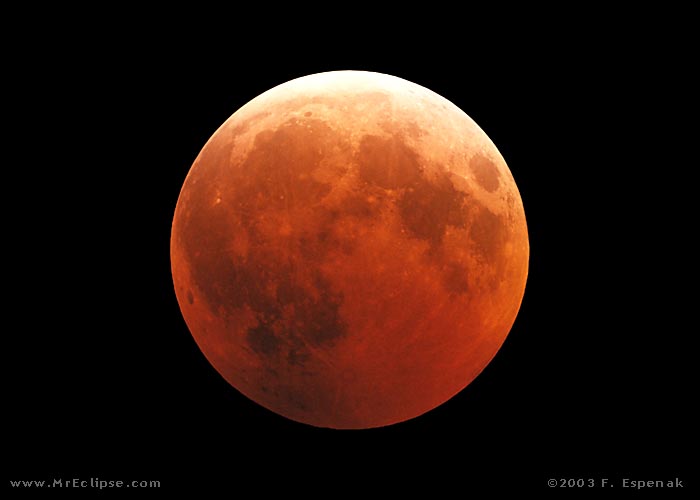
Saturn Direct in Scorpio, An Orange Full Moon

"The actual color of the moon depends on air quality." - NASA
Many forests, including the Old Tall Ones, The First Growth Trees, on Vancouver Island, B.C. are burning. We are not far from the burning. The air quality is a daily challenge to breath.

Forests smoke from space


Last night Pete and I had to leave home when our neighbor started burning his garbage, in his fireplace. His practices are not uncommon, not every one who has a fireplace burns their garbage; but, there are no air quality police and this man does what he wants when he wants.

When we first moved here I had contacted with him, telling him about my health condition and the need to be informed if he ever used chemical pesticides or herbicides. "I never use pesticides."

I also talked to him about burning (wood). He told me, "I don't burn fires." Obviously that has changed over the years, and there is no communication between us. There is very little communication with any of our neighbors.

Every one of our neighbors is a land-owner. Private property is their value. But none of them will maintain the common gravel road that is regularly used by all, is rutted from use and depressed with pot holes. That remains a practice Pete has done. He does it because he was trained to mend. He does it because it's important to our old Subaru.

We are the only renters in the neighborhood; we live under-the-wire with a lifestyle that is different than the one land owners abide by. I'm writing about this because it seems to fit with the current conditions of the sky ... in more than one level of the meaning. The orange sky is a night time reminder of the air that is now filled with the charred remains of one of our oldest and tallest Teachers. Trees are burning. Trees are burning because ... Earth's climate is in chaos. It is not changing, it has changed. Not for the first time, life on Turtle Island is in huli upheaval.

Oh, how differently would the view from Skywoman's home of origin be ... if we all began listening and knowing Skywoman, rather than Eve as the First Mother. Robin Wall Kimmerer, a woman who is feeding me stories that consolidate my gains, rather than focus on my losses, writes in Braiding Sweetgrass, "On one side of the world were people whose relationship with the living world was shaped by Skywoman, who created a garden for the well-being of all. On the other side was another woman with a garden and a tree. But for tsting its fruit, she was banished from the garden and the gates clanged shut behind her. That mother of men was made to wander in the wilderness and earn her bread by the sweat of her brow, not by filling her mouth with the sweet juicy fruits that bend the branches low. In order to eat, she was instructed to subdue the wilderness into which she was cast.  Same species, same earth, different stories...They tell us who we are (our stories). We are inevitably shaped by them no matter how distant they may be from our consciousness. One story leads to the generous embrace of the living world, the other to banishment...And then they met--the offspring of Skywoman and the children of Eve--and the land around us bears the scars of that meeting, the echoes of our stories. They say that hell hath no fury like a woman scorned, and I can only imagine the conversation between Eve and Skywoman: "Sister, you got the short end of the stick ..."

When I awoke to the journey as Navigator and Translator, it was the limitation and reality of living with Multiple Chemical Sensitivities that opened my eyes, eyes and heart to precisely what Wall describes: "We are inevitably shaped by (our stories) no matter how distant they may be from our consciousness." Again and again I have acknowledged the deep and sustaining value of living in our car, setting up our nighttime home in her small enclosure, while being at the edge of the Ocean at a place I had known since a tiny girl. The Moon, Grandmother Moon, rose from our Ocean to light our way. She was indeed showing us the way home. From those 2007 engagements my life has been timed by Mahina, the Moon.

My throat, eyes, ears and lungs burn from the air filled with the charred sadness of the Tall Ones. Kimmerer's words in Braiding Sweetgrass continues to counsel me with a picture, and stories that consolidate the gains, and the losses. "If all the world is a commodity, how poor we grow. When all the world is a gift in motion, how wealthy we become." Kimmerer continues to feed me this, "In the old times, our elders say, the trees talked to each other. They'd stand in their own council and craft a plan. But scientists decided long ago that plants were deaf and mute, locked in isolation without communication ... Until quiet recently no one seriously explored the possibility that plants might "speak" to one another. But pollen has been carried reliably on the wind for eons, communicated by males to receptive female[.] There is now compelling evidence that our elders were right--trees are talking to one another. They communicate via pheromones, hormonelike compounds that are wafted on the breeze, laden with meanings...The downwind trees catch the drift, sensing those few molecules of alarm, the whiff of danger...Forewarned is forearmed...The individual benefits, and so does the entire grove. Trees appear to be talking about mutual defense..."
Smack in the middle of the Navigating and Translating of life, like Skywoman falling, I have fallen through or off the edge, more than once. I wonder, marveling really, when I wake up after one more challenge to keep breathing. Last night while we sat in our Subaru, looking at the orange fullness of Mahina the Moon, Pete and I both rewound the nights when we were at the Ocean's shore at the Tide Pools of O'ahu's South shore. Navigating, bundled in quilts and nestling as best we could with pillows. We fell, and dreamed. Snoring a bit the dreams were scattered and shrouded, like the Sky.

Elsa P. writes of this time from her astrological sky perspective. "Saturn is direct consolidate your losses and your gains." Many people comment on her post and cite their experiences with the planet of consolidation (Saturn) and mastery in the sign of loss or gain/life and death (Scorpio). The perspective I  experiences is large and deep. It's the subtitle to my kuleana as Navigator and Translator.

The sadness, tears and difficulty breathing is no less the experience of Mother Earth as her skin burns from the wildfires in many places across the roundness of her being. What it takes for me to keep breathing is a small mirror of her experience. I make adjustments: bundle myself and my loved one Pete, and turn the key to our Subaru. We navigate away, for a time. We return hours later to the lingering smoke from our neighbor's garbage burn. With Saturn in Scorpio, I recognize my last fling at public expression (teaching in small groups) is a loss that must be let go. That part of my identity (Sun in Scorpio in the 10th House of Public Career) is dead.

Consolidating the gains and the losses I am grateful for this Quonset Hut that has an air filter to aid breathing. We invested in this small space, and the appliance when there were resources (money). Serving others through our example, I write as if my life depended upon it. And, it does. I gift it, as Gathered Magic and take the next breath. Is that what the Trees have told their entire grove when the first Tree sniffed the smell of wildfire? Did they send the gift of gathered magic ... telling the next, and the next ... there will be another time and place for dreaming the world as a gift in motion?

I hope so.


http://www.elsaelsa.com/astrology/saturn-direct-in-scorpio-consolidate-your-losses-and-your-gains/#comments


Monday, July 13, 2015

Brings

We have had a very busy week, and the weekend of events and gatherings capped the auspicious time. Slow and steady progress ... he puko'a kani 'aina is my password as we continue in small ways to gain steadily until firmly established.

I found the list (shown front and back) of things 'TO BRING' from one of our first Safety Pin Cafe storytelling times. We were going to make bottle rattles and tell the tale of Raven Stealing the Sun. The list of things for me to bring include all the necessities for a Border Witch!

As Pete and I finished our nourishing breakfast of steamed braising greens, slices of chicken coated with olive oil and Italian herbs I read the list to him. He cackled, "You should put that up on your blog!!" Funny, I thought.

The ways we keep track of the structure of our ventures, inventorying our cache of resources and ingredients. Unique for each of us, and what tickles me today is how my lists of TO BRINGs is something I have been doing for decades.

Beginning with my first job as a teacher and home educator for HEAD START back in the day (1980) I have toted books, sticks, paste, paper, string, beans, and other possibilites. My vehicle of the day was the traveling 'classroom' all the everyday utility of a wondering storyteller!

I'm reading a wonderful book that reminds me to remember to remember. It's Braiding Sweetgrass by Robin Wall Kimmerer. Her work, and the way she honors Trees by writing words, and stories worthy of their sacrifice (for they do give themselves for the production of books, among other things). Kimmerer's book is divided into sections, and then into chapters. I am reading the Section "Picking Sweet Grass" and nearing the end of the chapter, "The Honorable Harvest."

I met Carol Crowe, an Algonquin ecologist, " writes Kimmerer "at a meeting on indigenous models of sustainability. She told the story of requesting funding from her tribal council to attend the conference. They asked her, "What is this all about, this notion of sustainability? What are they talking about?: She gave them a summary of the standard definitions of sustainable development, including, "the management of natural resources and social institutions in such a manner as to ensure the attainment and continued satisfaction of human needs for present and future generations." They were quiet for a while, considering. Finally one elder said, "This sustainable development sounds to me like thye just want to be able to keep on taking like they always have. It's always about taking. You go there and tell them that in our way, our first thoughts are not 'What can we take?" but "What can we give to Mother Earth?' That's how it's supposed to be."

"The Honorable harvest," continues Kimmerer, "asks us to give back, in reciprocity, for what we have been given. Reciprocity helps resolve the moral tension of taking a life by giving in return something of value that sustains the ones who sustain us. One of our responsibilities as a human people is to find ways to enter into reciprocity with the more-than-human people world. We can do it through gratitude, through ceremony, through land stewardship, science, art, and in everyday acts of practical reverence."

It's something to consider every day. What do I bring?

Tuesday, April 14, 2015

Let there be light ... oh, wait!

Today the heavy rains have blown in from the south

The Tall Ones, send pollen clouds thick and golden.
But, heavy 'ua kalani (rain from the heavens) dampen their dust storm temporaily.

The angle of our lucky fish wind sock is pushed from the wind out of the south.
The post 'Enough ... Mauna Kea under seige' and the another raging issue of controversy in Hawaii, got me thinking. People are watching, curious, and perhaps, motivated to see how what happens there affects us here. Henry Curtis, writing on his Ililani Media blog is the bulldog/watch dog of all issues energy in the Hawaiian Islands. Curtis is hot on the okole of the ram-jam buy-out of HECO (Hawaiian Electric Company) by Nextera Energy Hawaii and the President of that company, Eric Gleason.

There are other options for keeping the lights on in Hawaii besides the sale of HECO to Nextera. (If you are curious, live in the Hawaiian Islands, and are invested in exploring and supporting other options, click on that, read the articles Curtis has published). Pushed ever closer to the buy-out by Nextera Energy as a done deal just for the heck of it, let's go back to the top of the mountain, Mauna a Wakea (Mauna Kea) and consider the following essay about the wind wake ... the largest in the world, as a matter of fact, rising from the islands of Hawaii, "barely a speck in the 64 million square miles of the Pacific Ocean."

Back in 2003, a feature article "Little Islands Big Wake" by Laurie J. Smith " appeared on the NASA website Earth Observatory. That article was republished, and included in Na Maka O Ka 'Aina's documentary Mauna Kea: Temple Under Seige. Here's part of what Smith wrote in that article:

"On a map of the world, the Hawaiian Islands are barely a speck in the 64 million square miles of the Pacific Ocean. But oceanographers recently discovered that these tiny dots on the map have a surprising effect on ocean currents and circulation patterns over much of the Pacific.
In the Northern Hemisphere, a system of persistent winds blows from northeast to southwest, from North and South America toward Asia, between the equator and 30 degrees north latitude. These northeasterly winds are called trade winds. Typically, the trade winds continue on an uninterrupted course across the Pacific — unless something gets in their way, like an island.
Although many people associate Hawaii with flat, sunny beaches, the elevation of the major Hawaiian Islands generally exceeds 3,200 feet (1,000 meters). Mauna Kea and Mauna Loa on the island of Hawaii (commonly referred to as “the Big Island”) both tower nearly 14,000 feet (about 4,300 meters) above sea level. In addition, Mount Haleakala on the island of Maui stands at over 10,000 feet (3,055 meters) high.
Hawaii’s high mountain landscape presents a substantial obstacle in the path of the trade winds. The elevated topography blocks the airflow, effectively splitting the trade winds in two. This split causes a zone of weak winds, called a “wind wake,” to form on the leeward side (away from the wind) of the islands.
“If there were no mountains on the Hawaiian Islands, then nothing would happen. The trade winds would just blow smoothly across the ocean with no effect,” said Shang-Ping Xie, professor and researcher at the University of Hawaii’s International Pacific Research Center and Department of Meteorology.[...]
From the small Quonset Hut that is my writing and eating place, I look out and see the fuschia bells of the salmon berry flowers. Moving toward fruit, I observe the process and the progress of a woman practicing kilo. I am a woman practicing kilo. Simple stuff. Maintain a keen seen of observation. Technology evolves, the eye and head the starting point, the telescope, the satellite, the computerized tracking. More and more, better and better. Or, is it so much better? Raven hollers at me from the branches of the Tall Ones. I hear. I get up and outside. We do a little call and respond. Still, I cannot see where he sits. It does not discount his being there. Back in my place at the keys he continues. The weather and winds described in Smith's 2003 article are the same ones that have evolved in the dozen years. Yesterday's heavy rains were incited by those Hawaii-touched wind wakes. Here. There.

It's that lead paragraph that really gets me in the gut.

There in the middle of the great moana nui a kea, the great open water, significant chain reactions are triggered by the akua (the elemental forces, energies, geographic, oceanographic, and atmospheric dieties). Humans are part of the process because we are present. We are part of the whole process. In the struggle to maintain our place in the process it seems we lose sight of what our part is. First, we are part of, not the whole. The issues and current protests about Mauna Kea are old ones. What is sacred, and why does it matter?
"A species and a culture that treat the natural world with respect and reciprocity will surely pass on genes to ensuing generations with a higher frequency than the people who destroy it. The stories we choose to shape our behaviors have adaptive consequences."- Braiding Sweetgrass ... Robin Wall Kimmerer, 
In the Foreword to the book Ka Honua Ola The Living Earth Taupouri Tangaro, PhD and son-in-law to the author begins with this paragraph, "Ka Honua Ola is about being conscious of the embodied experiences that define the culture of Hawai'i and differentiate it from the culture of the none-Hawaiian world. Does such a pointed statement shock you? Well, take a deep breath, for it is true--the author will not recant. But if this statement seems to hint at cultural imperialism and isolation, read again. Defining and differentiating do not automatically imply disconnection. Hawai'i equates profound connection without limits to earth, sea, sky, and soul" [...] "We, as Native Hawaiians, must continue to unveil the knowledge of our ancestors. Let us interpret for ourselves who our ancestors are, how they thought, and why they made certain decisions. In the process, we treat them with honor, dignity, love, and respect--whether they be akua, ali'i, or kanaka--because they are our 'ohana, our family. - Ka Honua Ola The Living Earth ... Pualani Kanaka'ole Kanahele


The placard on the wall from the exhibit "Native People, Native Places"


Today the sky is clearing, sun feeds the forest and lights the space inside the Quonset. I take a deep breath, mahalo the forest for feeding me the oxygen that was just moments ago part of their leaves, their needles, their feathery cedar fingers. Before we next reach for that switch to turn the light on, what songs will we sing, what stories will we tell, which stories will take care of us?